



The issue of reservation for the economically weaker sections is being heard continuously in the Supreme Court. Poverty was mentioned in the court on Thursday. Talking about reservation, the highest court clearly said that poverty is not a permanent thing. In such a situation, instead of reservation, measures like scholarship can be taken.
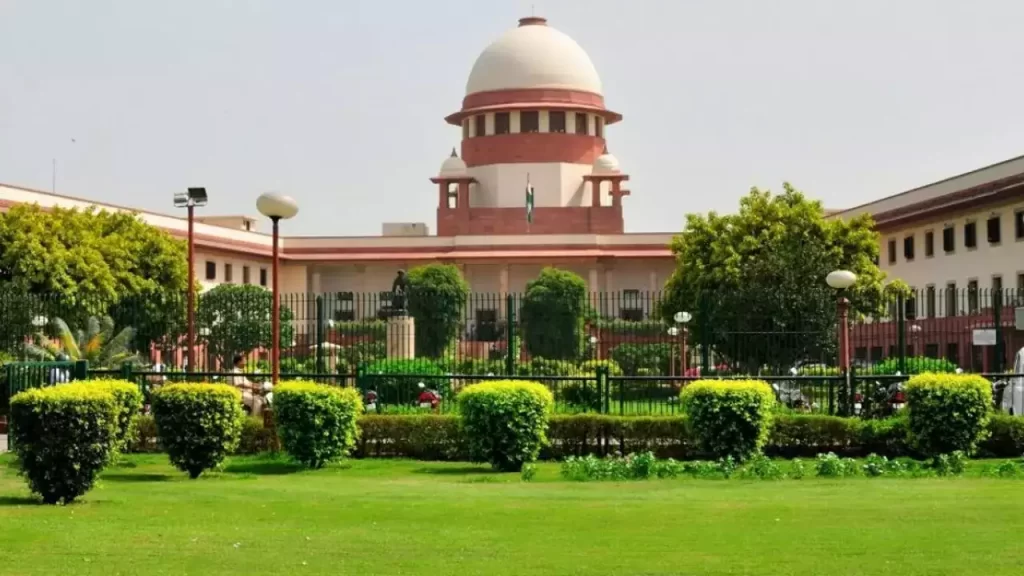
The Supreme Court has described poverty as ‘temporary’. The court on Thursday said that instead of providing 10 per cent reservation to the economically weaker sections (EWS) of upper castes in government jobs and educational institutions, it can be promoted through various positive measures like scholarship at the initial stage itself. The top court said that the word reservation has different implications with respect to social and financial empowerment and it (reservation) is meant for those sections which have been oppressed for centuries.
A five-judge Constitution Bench headed by Chief Justice Uday Umesh Lalit said that for centuries, people oppressed because of caste and livelihood have been given reservation and the government will provide scholarships and freebies to the EWS community among the upper castes without getting bogged down in the issue of ‘reservation’. Could provide facilities like education.
“When it is related to other reservations, it is related to lineage,” the bench said. This backwardness is not a temporary thing. Rather, it continues for centuries and generations, but economic backwardness can be temporary.
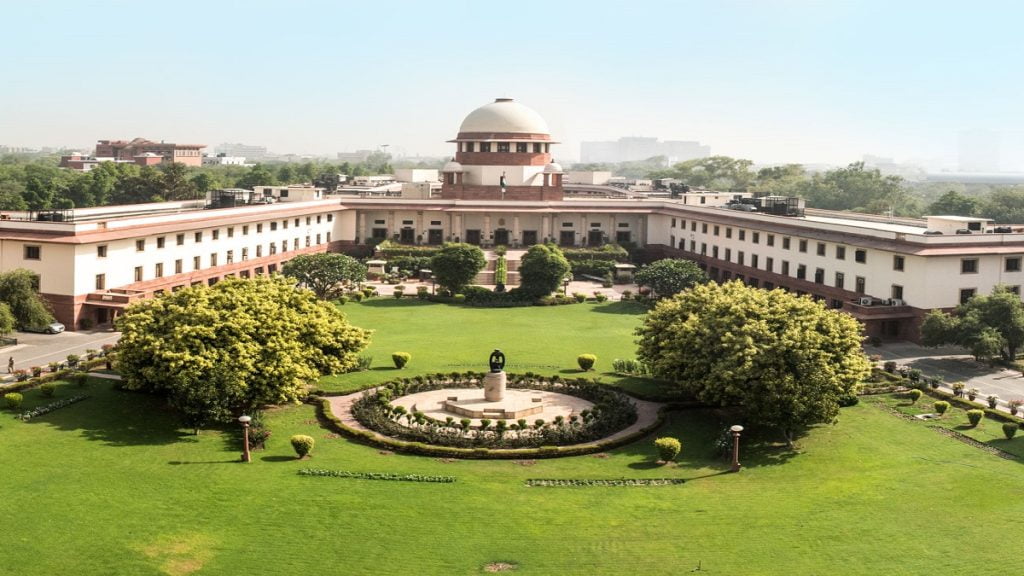
Solicitor General Tushar Mehta, appearing for the Centre, defended the 103rd Constitutional Amendment saying that 10 per cent quota for EWS of general category has been given without tinkering with the 50 per cent reservation available for SC, ST and OBC. He further said that the parliamentary wisdom of a constitutional amendment decision cannot be nullified, provided it is established that the decision in question violates the basic structure of the Constitution.
The Constitution Bench also included Justice Dinesh Maheshwari, Justice S Ravindra Bhat, Justice Bela M Trivedi and Justice JB Pardiwala.
Parliament has decided so can’t repeal…
Solicitor General Tushar Mehta said that when a statutory provision is challenged, it is often said that it violates a particular Article of the Constitution, but here the Parliament has included a provision in the Constitution and hence its validity The question cannot be raised. He said that the Constitution is not a static formula and Parliament can always take decisions to fulfill the aspirations of the nation and if some action is taken without disturbing the quota for SC, ST and OBC, it cannot be repealed. could.
Mehta said at the outset of the hearing that the constitutional amendment made by Parliament in exercise of its powers has made the job of those challenging it like any other law difficult. He said that after a detailed study, the figure of annual income of Rs. The Constitution Bench will continue hearing the matter on September 27.
